Sound Foundations: What’s Holding Us Up
August 12, 2023
Home Maintenance and Tips
August 12, 2023
Home Maintenance and Tips
Now that the American real estate market is enjoying a solid rebound, residential construction and custom-homebuilding are on the upswing. Prospective homeowners are once again interested in specialized homes, which entails making certain decisions about how the property should be built.
When it comes to choosing home foundations, future homeowners should think of the following:
Concrete Blocks vs. Poured Concrete
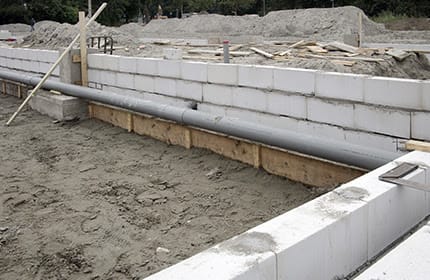
Although masonry is an honored craft that has served humanity well for many centuries, stone and block foundations have been largely replaced by poured concrete. In some cases, a combination of concrete block and poured concrete can be used to support different parts of the house, but many builders these days mostly prefer poured foundations because they are known to reduce the potential for cracks and leaks.
Soil Analysis
This step takes place before forming, and is one of the most important. The soil analysis takes into account water tables, ground conditions, potential impact of flood plains, and porosity. Choosing the right mix of backfill according to the soil analysis is crucial, particularly in areas where the ground is known to be very fertile, which means that it is rich in organic matter and bound to expand during the rainy season.
Types of Home Foundations
Builders settle on the types of foundations they will use according to local building codes and the practicality of construction. In warm climates, a raised slab of poured concrete can be formed into a single unit that combines the footing with the actual foundation elements. A more unusual type of foundation involves building the home entirely on concrete piers; however, building codes now call for footing and pier foundations.
Materials Testing
Laying out foundations primarily made of poured concrete is a laborious process. For this reason, it is not uncommon to run into situations whereby laborers may not lay a perfect foundation on the first attempt. Material testing is essential in residential construction, particularly in areas that are rich in aquifers or of high seismicity. Builders use concrete monitoring equipment, like the products found at Certified Material Testing Products, after the concrete mix has been poured and set to measure possible displacement and cracks caused by shifting of the foundation, backfill or soil. It is not unusual to repair foundations after pouring. Not all cracks or imperfections are caused by improper forming, and thus builders wait a few days to monitor how the concrete cures and sets.
In the future, precast foundations and concrete forming made of advanced polyethylene material will make home foundations sturdier than they are today, and they will also make the construction process easier.
Stay Updated On Our Most Recent Blog Posts

Market Update
Brian Ng | April 28, 2022

Seller
December 15, 2022

Real Estate Investing
Brian Ng | September 26, 2024

Real Estate
June 21, 2022

Real Estate
June 14, 2022

Real Estate Investing
Thao Dang Pham | October 22, 2024
You’ve got questions and we can’t wait to answer them.